Best Center Shaft Face Balanced Putters for Consistent on-Green Performance
Searching for center shaft face balanced putters? This guide highlights five top options designed for stability, reduced twisting, and a smoother stroke. Best for beginners building consistency, and experienced players seeking forgiveness from off-center contact. Each listing notes who it’s best for and a clear reason to choose it. A quick buyer’s table follows to compare core features at a glance.
| Product | Best For | Key Benefit |
|---|---|---|
| Roykaw Zero Torque Golf Putter | Straight-putt practice for stable starts | Zero-torque stability with toe-up balance |
| PGM 34″ Zero Torque Putter Green | Beginners and high-hand-tremor players | Face-balanced with high forgiveness and low deviation |
| PGM 34″ Zero Torque Putter Silver | Consistency in square-to-square strokes | Balanced center shaft, MOI-enhanced head |
| PGM 34″ Zero Torque Putter with Ball Retrieval | Practice rounds or players needing ball pickup | Center shaft, face balance, convenient ball pickup |
| MAZEL Stand Up Golf Putter | Alignment checks and consistent aim | Stand-up design with zero-torque center shaft |
Roykaw Zero Torque Golf Putter — 35’’ Right-Handed Straight Putter
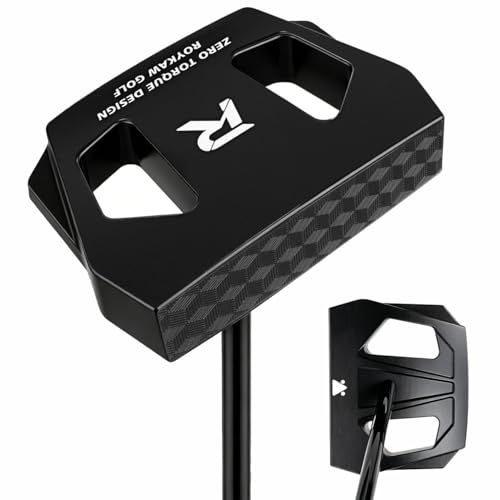
Best for players who want a stable, straight starting line. The Roykaw Zero Torque features a zero-torque structure with the shaft toe-side near the center of gravity, a 1° forward lean, and a 25 mm onset behind the face. This configuration aims to keep the putter face square throughout the stroke, reducing unwanted twisting and promoting a consistent start line. The toe-up design minimizes face rotation, helping players maintain a square face at impact. The grooved face encourages faster forward roll for improved distance control.
Who it’s best for: golfers seeking a smoother, repeatable stroke and improved directional control, especially those who struggle with face rotation mid-stroke. Caution: first-time users may need a short adaptation period to leverage the zero-torque geometry effectively.
PGM 34″ Zero Torque Putter Green — High Forgiveness

This face-balanced putter, designed with a 0° toe hang, supports a straight-back, straight-through stroke. Its toe-up balance resists twisting to keep the face square, delivering high forgiveness and low deviation even on off-center hits. The center shaft connects at the putter’s center of gravity to enhance stability and consistency, helping players achieve smoother, more confident puts.
Best for: beginners seeking reliability and players who rely on a steady, square stroke. Caution: as with any face-balanced design, this may feel different if you are used to a heavy toe hang or pronounced arc in your stroke.
PGM 34″ Zero Torque Putter Silver — Balance and MOI
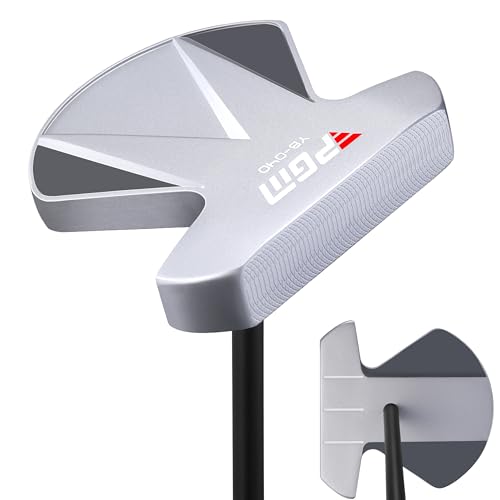
This model mirrors the zero-torque philosophy with a 0° toe hang and a center-shaft connection. It emphasizes an enhanced MOI (moment of inertia) design to minimize twisting and deviation, promoting true rolls on mis-hits. The result is a consistent face square across strokes, supporting players who want reliable performance without perfect contact.
Best for: players who want predictable behavior and an emphasis on straight-line accuracy. Caution: color or finish variation may affect perceived alignment in certain lighting conditions.
PGM 34″ Zero Torque Putter with Ball Retrieval — Convenience Focus

This variant adds a built-in ball-pickup feature, combining center shaft stability with convenient ball retrieval. The toe-hang is 0° (face balanced), and the shaft remains aligned with the center of gravity to minimize torque. The design aims to keep the face square through the stroke for straighter putts and easier practice sessions.
Best for: players who value practice efficiency and quick ball pickup. Caution: the added hole should not be relied on for gameplay shots in tight spaces where it might snag or interfere with stance.
MAZEL Stand Up Golf Putter — Graphite Shaft
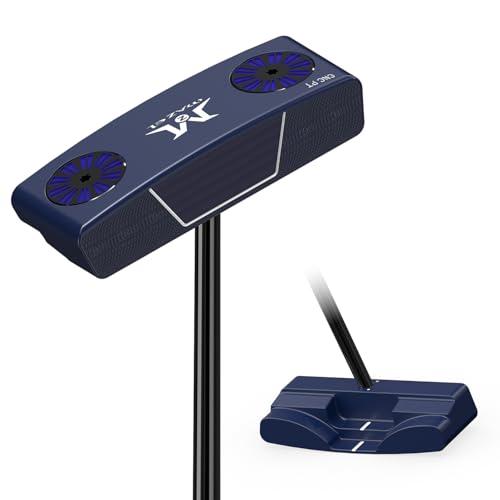
The MAZEL standout puts a unique twist on center-shafted design with a stand-up feature that allows alignment checks from behind and along the line of play. The zero-torque center shaft minimizes rotation, helping to keep the face square and the stroke straightforward. The double-milled face provides a flat, consistent surface for repeatable contact and improved feel.
Best for: players who benefit from alignment checks during practice and those who want additional stability on the greens. Caution: stand-up design requires a small adjustment in setup, which may feel different for players used to traditional putters.
Buying Guide: Center Shaft Face Balanced Putters
Key considerations when choosing a center shaft face balanced putter include stroke type, forgiveness, and alignment aids. Below are practical questions to guide your decision.
- What is your typical stroke type? If you prefer a straight-back, straight-through stroke, a toe-up balance or face-balanced design is often best.
- How forgiving should the putter be on off-center hits? Higher MOI and centered shaft connections generally offer more forgiveness.
- Do you value alignment aids or extra features? Options like stand-up designs, built-in ball-pickup holes, or grooved faces can influence consistency and practice efficiency.
- Will you practice mostly on practice greens or real-course greens? Ball pickup features are handy during practice rounds but may be less useful in play.
- What is your height and grip style? A 34″ or 35″ length is common; ensure the shaft length fits your posture and eye alignment for a comfortable stroke.
FAQ
- Q: Are center shaft face balanced putters better for beginners? A: They can help promote a straighter stroke and reduce twisting, which benefits beginners seeking consistency.
- Q: Do zero-torque designs require a different grip? A: They typically work with standard grips, but players may need slight adjustments to feel the balance.
- Q: Is a ball retrieval feature practical for practice only? A: It adds convenience during practice and casual rounds, but may not affect on-course performance.
- Q: What should I consider about MOI in a putter? A: Higher MOI generally means less twisting on off-center hits, improving forgiveness and distance control.
- Q: Can I switch between these models easily? A: Each model has a similar center-shaft, face-balanced design, but you may notice differences in weight distribution and balance.
- Q: Are these suitable for both right-handed and left-handed players? A: The listed models are specified for right-handed use. Left-handed variants may be available from the same brands.